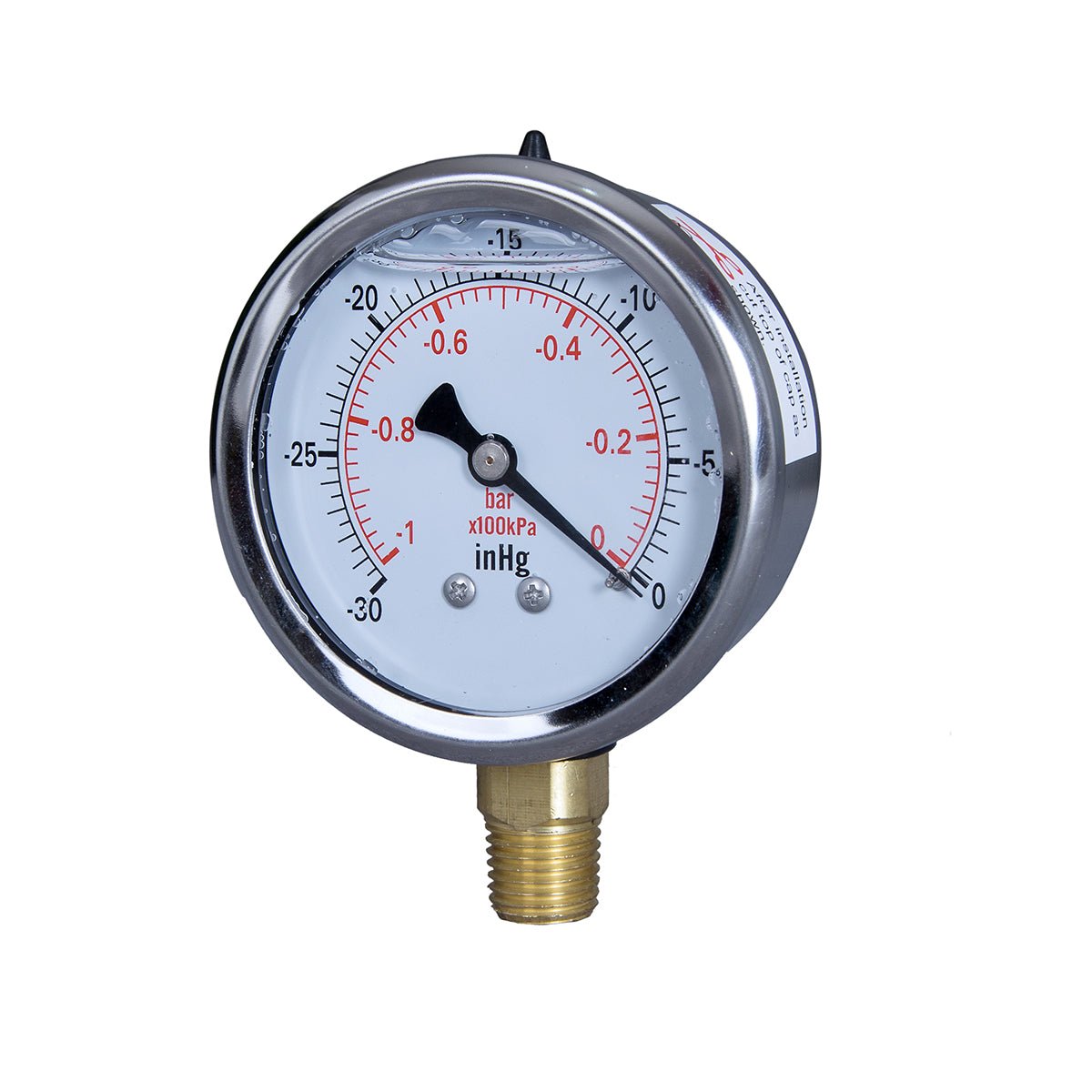
Pressure Gauge Fogged Up? 4 Causes and the Permanent Fix
JIVTOA pressure gauge fogs up when humid air trapped inside the case cools past its dew point and water vapor condenses into droplets on the inside of the lens — the classic moisture-meets-temperature-change failure (Pressure Center). Wiping the glass does nothing — the moisture is behind it. And while a single fogging event looks cosmetic, recurring gauge lens condensation is evidence that the case seal has been compromised and corrosion of the movement has likely already begun.
The permanent fix removes the air instead of fighting the humidity: a sealed liquid filled pressure gauge floods the entire case with clear glycerin or silicone oil, leaving no air pocket to condense. This tutorial walks through the four causes of moisture inside a pressure gauge, a numbered decision ladder for a gauge that has already fogged, and how to prevent the problem entirely at spec time.

Key Takeaways
- Fogging happens when daily temperature cycles push the pocket of air inside a dry case past its dew point — outdoor day/night cycling is the classic trigger.
- Four causes explain nearly every case: temperature cycling, humid washdown air breathing through case seals, a cracked window or failed gasket, and direct rain or spray on the gauge.
- If fog returns after drying, the seal is done — replace it, because trapped moisture corrodes the movement either way.
- Drilling a drain hole breaks the seal permanently; a sealed liquid filled gauge solves the problem by displacing all the air.
- For outdoor irrigation and food-washdown service, spec the sealed version from day one — those two applications drive most repeat-fogging cases we see.
Why Is There Moisture Inside My Pressure Gauge?
In almost every case we inspect at JIVTO, the story starts the same way: the gauge left the factory dry, so a small pocket of air sits above the dial carrying whatever humidity was present at assembly. Sunlight heats the case by day and night cools it again. Each cool-down drops that trapped air below its dew point, water vapor condenses on the coldest interior surface — the lens — and gravity can't drain a sealed case, so the droplets hang there as fog.
It gets worse over time, not better. As the air heats and cools it expands and contracts, and the case breathes through its seals. Every cycle pulls in fresh humid air, each fog episode leaves more moisture inside than the last, and eventually the movement underneath starts to corrode.
The 4 Causes of Gauge Lens Condensation — Quick ID Table
| # | Cause | Telltale sign | First move |
|---|---|---|---|
| 1 | Outdoor day/night temperature swings | Fog forms overnight or after cold mornings, partially clears in afternoon sun | Shield or relocate; plan the sealed upgrade |
| 2 | Washdown or high-humidity air breathing through case seals | Fog returns within days of drying; gauge sits near a hose-down station | Upgrade to sealed liquid fill |
| 3 | Cracked window or failed case gasket | Visible chip or crack; droplets pool at the bottom of the case; fog appears right after heavy rain | Replace the gauge — the movement may already be wet |
| 4 | Mounted where rain or spray hits the lens directly | Fog tracks with weather or washdown schedule; the dial faces the spray source | Reposition or add a rain hood, then upgrade the seal |
Cause 1 and cause 2 are the volume drivers. Cause 3 and cause 4 accelerate them: any breach or constant spray gives humid air a much easier path into the case.
Can You Save a Fogged Gauge? Work the Decision Ladder
Sometimes yes — once. Use this numbered ladder on any foggy gauge window fix before spending money on a replacement.
- Rule out a leak first. Check the window for cracks and run a finger along the bezel gasket. If the window is chipped or the gasket has hardened and gaps, stop here: liquid entered directly and the movement has been exposed. Go to step 5.
- Dry it once — as a diagnostic, not a cure. Pull the gauge and let it sit in a warm, dry indoor space for a day or two, or seal it in a bag with silica gel. If the fog clears and never returns under normal duty, you caught a one-off event. Done.
- Relocate or shield the gauge. If the dial faces direct rain or washdown spray, angle it away, move it out of the spray cone, or fit a rain hood. Reducing direct impingement slows the breathing cycle dramatically.
- Skip the drill-hole hack. Forum advice suggests drilling a tiny vent hole so moisture can escape. It works briefly but permanently defeats the case seal — dust, insects, and washdown water now have a guaranteed path in, and any sealing warranty is gone.
- Replace with a sealed liquid filled unit if fog recurs. Recurring fog means the seal is compromised and corrosion risk exists regardless of how well you dry the window. A replacement costs less than the downtime from a sticky or seized movement on a live line.
Why Sealed Liquid Fill Ends the Problem for Good
A liquid filled gauge doesn't resist condensation — it makes condensation impossible. At the factory the case is evacuated and completely filled with clear glycerin (or silicone oil for extreme temperatures). No air pocket remains, so nothing can cycle past a dew point and no vapor can condense on the lens — a sealed case limits the humid-air exchange behind repeat fogging and internal corrosion (Mid-West Instrument). The fill also cushions the Bourdon tube and movement against vibration — filled cases remain the standard answer for vibration protection, per Ashcroft's overview — so one spec change fixes both fogging and pointer chatter at once.
The fluid choice matters for temperature, not fog prevention: glycerin handles roughly -20°C to +60°C; silicone oil extends to about -40°C to +200°C for freezers, winter installs, or hot lines. The sealed fill itself is what blocks moisture — see our glycerin vs silicone oil fill comparison to match the fluid to your temperature range.
Preventing Fog at Spec Time
The cheapest foggy gauge fix is the one you never need, which means choosing sealed construction before purchase. Two customer profiles generate most repeat-fogging cases JIVTO handles:
- Outdoor irrigation and agricultural pumping, where gauges ride year-round day/night temperature swings and monsoon-season humidity.
- Food, beverage, and washdown lines, where daily hose-downs push warm humid air against the case seals several times per shift.
For both, spec the sealed version up front rather than fight the environment afterward. While you're at it, get the rest of the fit right: lower mount for inline plumbing or back mount for panels, and a range sized so operating pressure sits in the middle third of the dial — the full checklist is in our liquid filled pressure gauge buyer's guide.
JIVTO 2" and 2.5" Liquid Filled Gauges: The Sealed Upgrade Path
JIVTO builds liquid filled pressure gauges factory-direct in Wenzhou, China, with 15+ years of gauge manufacturing experience. Our 2" and 2.5" liquid filled gauges feature fully sealed glycerin fill, 1/4" NPT threads in lower or back mount, and stainless construction suited to outdoor and washdown service. Wholesale buyers get OEM/private-label options, sample confirmation before production, and typical terms from around 200 units MOQ.
Request a quote with your dial sizes, pressure ranges, mount styles, and destination port for factory-direct pricing and lead time.
Frequently Asked Questions
Is a fogged pressure gauge dangerous?
Short term, mostly no — it's a visibility problem, not a safety problem. The reading becomes hard to see, but the mechanism usually still tracks pressure correctly. The long-term risk is mechanical: trapped moisture corrodes the movement and Bourdon tube, producing sticky pointers and drifting readings. Treat it as urgent only if the window is cracked, the gauge is on a safety-critical line, or the needle has started sticking.
How do I get moisture out of a pressure gauge?
Remove the gauge and dry it slowly in a warm indoor space, or seal it in a bag with silica gel for a couple of days. Treat this as a test: if the fog returns within a few weeks of normal duty, the case seal has failed and replacement is the reliable fix.
Why does condensation keep coming back after I dry the gauge?
Because drying treats the symptom, not the entry path. Each temperature cycle makes the case breathe through its worn seals, pulling in fresh humid air that recondenses on the next cool-down. Once that cycle is established, no amount of drying lasts.
Do liquid filled gauges ever fog up?
Effectively no. With the case completely flooded there is no trapped air to pass a dew point and no vapor to condense — which is exactly why sealed fill is the permanent solution. In deep-freeze service, specify silicone oil instead of glycerin so the fill itself stays fluid down to about -40°C.
The Bottom Line
A pressure gauge fogged up from the inside is telling you its seal has lost the fight with humidity. Dry it once to confirm, shield it from spray, and if the fog returns, upgrade to a sealed unit instead of repeating the cycle. Start with the complete liquid filled pressure gauge guide to spec the replacement correctly the first time.